
Can Losing Weight Increase Testosterone Levels in Men?

If you have been working to lose weight and wondering whether it could also improve your testosterone, the short answer is: it may, especially if you are carrying excess body fat and your testosterone is low for reasons related to weight or metabolic health.
That does not mean every man with extra weight has low testosterone. It also does not mean weight loss will correct every case. Testosterone can be affected by age, sleep, medications, illness, pituitary or testicular conditions, and several other factors. Still, the connection between excess body fat and lower testosterone is real—and, for some men, at least partly reversible.
The quick answer
- Losing excess weight can increase testosterone in some men, particularly when obesity is contributing to low levels.
- Larger, sustained reductions in excess weight tend to be associated with greater improvement, but there is no single percentage that guarantees a result.
- Resistance training, adequate sleep, balanced nutrition, and treatment of conditions such as sleep apnea may support both weight and hormone health.
- A crash diet or chronic under-eating can temporarily work against testosterone production.
- Symptoms alone cannot diagnose low testosterone. A proper evaluation includes your health history and repeat early-morning blood testing.
How body fat and testosterone are connected
The relationship between body fat and testosterone runs in both directions, but the strongest evidence shows that excess body fat—particularly visceral fat around the abdomen—can contribute to lower testosterone.
Fat tissue is active tissue. It participates in hormone signaling and produces inflammatory substances. With more visceral fat, the body may convert more testosterone to estrogen through an enzyme called aromatase. Obesity is also associated with insulin resistance, inflammation, and changes in the signals between the brain and the testes that regulate testosterone production.
There is another wrinkle: obesity can reduce sex hormone-binding globulin, or SHBG. Because SHBG carries testosterone in the bloodstream, a lower SHBG level can make total testosterone look lower. That is one reason a single lab result rarely tells the whole story.
Sleep matters, too. Obstructive sleep apnea is more common in men with obesity and can affect energy, sexual function, and hormone regulation. Medications, heavy alcohol use, uncontrolled diabetes, thyroid problems, and chronic illness may also enter the picture.
In other words, body fat and testosterone levels are connected through several systems—not one simple switch.
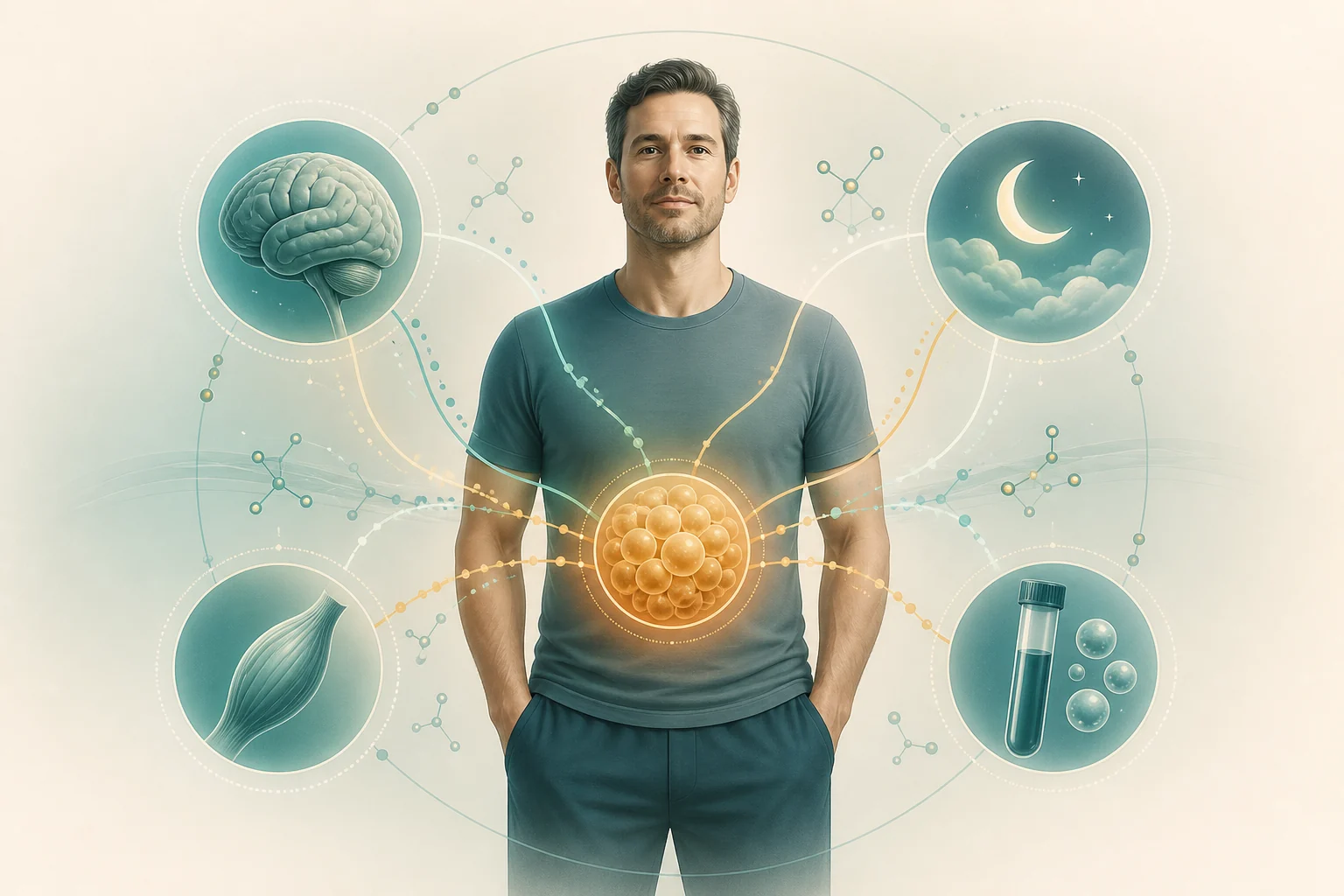
Does weight loss increase testosterone?
For many men with obesity-related low testosterone, yes. Research has consistently found that weight loss is associated with increases in total testosterone and, in many studies, free testosterone as well. The change is generally more noticeable when the weight loss is substantial and maintained.
This makes biological sense. As excess visceral fat decreases, insulin sensitivity and inflammatory signaling may improve. SHBG may rise, and the brain-to-testes hormone pathway may begin to function more normally. The result can be an improvement in the body’s own testosterone production.
The Endocrine Society now emphasizes addressing reversible contributors before considering testosterone replacement. For men whose low testosterone is associated with being overweight or obese and no other cause is identified, weight loss is typically the first-line approach.
But “associated with” is important. A man may lose weight and still have low testosterone because the underlying problem lies elsewhere. Another man may see his laboratory values improve without noticing a dramatic change in symptoms. The response is individual.
How much weight do you need to lose to affect testosterone?
There is no honest one-size-fits-all number.
Studies suggest a dose-response pattern: in general, greater weight loss is linked with a larger rise in testosterone. That does not make a particular number of pounds or a fixed percentage a guarantee. Your starting weight, amount of visceral fat, age, sleep, medications, medical conditions, and the cause of a low result all matter.
A better first goal is clinically meaningful, sustainable progress. Even when testosterone does not change much at first, reducing excess weight may improve blood pressure, glucose control, mobility, sleep, and cardiovascular risk. Those benefits are valuable on their own.
Progress should also be measured by more than the scale. Waist circumference, body composition, strength, sleep quality, and metabolic lab results can provide useful context. Renewed offers medical weight loss and body-composition support for patients who need a structured plan rather than another short-term diet.

Does the way you lose weight matter?
What matters most is losing excess weight safely and maintaining the change. There are several reasonable routes, depending on your health and needs:
Nutrition
A sustainable calorie deficit can reduce body fat without depriving the body of the protein, healthy fats, vitamins, and minerals it needs. The best plan is usually one you can live with—not the most restrictive plan you can tolerate for two weeks.
Resistance and aerobic exercise
Strength training helps preserve or build lean mass during weight loss. Aerobic activity supports heart health, insulin sensitivity, and calorie expenditure. A mix of both is generally more useful than chasing one “testosterone-boosting” workout.
Sleep and recovery
Short, inconsistent sleep can make appetite harder to manage and may interfere with normal testosterone rhythms. If you snore loudly, wake unrefreshed, or feel sleepy during the day, ask whether evaluation for sleep apnea is appropriate.
Medical treatment when indicated
Some patients benefit from clinician-guided treatment for obesity. Prescription weight-loss medications do not need to raise testosterone directly to be helpful; if they support meaningful fat loss and better metabolic health, testosterone may improve indirectly in some men. These medications are not right for everyone and require an individualized evaluation. Learn more about how medical weight loss works.
Can extreme dieting lower testosterone?
It can—at least temporarily.
Severe calorie restriction, inadequate dietary fat, overtraining, rapid loss of body mass, and poor recovery can signal that the body does not have enough energy available. Under those conditions, reproductive hormone signaling may slow down. This can happen even while someone is losing fat.
That is why the goal should not be to eat as little as possible. A sound weight-loss plan protects muscle, includes adequate nutrition, and is adjusted when fatigue, strength, sleep, mood, or sexual function begins to decline.
Does low testosterone cause belly fat—or does belly fat lower testosterone?
Both can happen, which is why men sometimes feel stuck in a loop.
| What may be happening | Clues that can go with it | What to do next |
|---|---|---|
| Excess visceral fat is contributing to lower testosterone | Increasing waist size, insulin resistance, sleep apnea, a low or borderline result | Address weight, sleep, medications, and metabolic health; repeat appropriate testing |
| True testosterone deficiency is affecting body composition | Low libido, fewer spontaneous erections, reduced strength or muscle mass, unexplained anemia, repeatedly low morning testosterone | Complete a clinical and laboratory evaluation to identify the cause |
| A different condition is causing overlapping symptoms | Fatigue without clear sexual symptoms, depression, thyroid symptoms, medication changes, chronic illness | Avoid self-diagnosis; review the broader health picture with a clinician |
Low testosterone can make it easier to lose muscle and harder to maintain a favorable body composition. Yet belly fat by itself does not prove testosterone deficiency. Many common symptoms—fatigue, low mood, poor sleep, reduced motivation—have more than one possible cause.
When should a man consider testosterone testing?
Testing makes the most sense when symptoms and risk factors point in the same direction. Possible signs include:
- Reduced libido
- Fewer spontaneous or morning erections
- Erectile difficulty
- Loss of muscle mass or strength
- Persistent fatigue
- Unexplained anemia
- Reduced bone density
- Fertility concerns
- Hot flashes in more severe cases
Clinical guidelines recommend diagnosing hypogonadism only when a man has compatible symptoms and consistently low testosterone on reliable testing. Testosterone changes during the day, so confirmation generally requires at least two early-morning blood tests, usually while fasting. Depending on the results and circumstances, the evaluation may include free testosterone, SHBG, luteinizing hormone, follicle-stimulating hormone, prolactin, thyroid testing, or other labs.
One isolated low value is not enough. Neither is a list of nonspecific symptoms from an online quiz.
Testing can be useful before a weight-loss program when symptoms are already present. Repeating it later may help determine whether better sleep, improved metabolic health, medication changes, or weight loss have affected the result. The timing should be decided with your healthcare provider rather than based on a fixed online schedule.
Can weight loss replace testosterone replacement therapy?
Sometimes weight loss is enough to improve testosterone and symptoms. Sometimes it is not.
If obesity appears to be the primary reversible contributor, it makes sense to address that first. But low testosterone can also result from a problem affecting the testes, pituitary gland, or hypothalamus. Men with appropriately diagnosed hypogonadism may still be candidates for testosterone replacement therapy after the cause, benefits, risks, fertility plans, and monitoring needs have been reviewed.
Testosterone should not be prescribed simply as a weight-loss drug. Although treatment for confirmed deficiency can affect body composition, it is not a substitute for nutrition, activity, sleep, or medical treatment of obesity. It can also suppress sperm production, an especially important consideration for men who want to preserve fertility.
If testing confirms a deficiency, the next step is a careful discussion—not an automatic prescription. Renewed’s page on testosterone therapy for men explains the clinic’s evaluation and treatment options in more detail.
A practical approach for men in Tucson
If weight, low energy, sexual symptoms, and testosterone concerns are all showing up at once, it is tempting to choose one explanation and run with it. A more useful approach is to look at the full pattern.
An evaluation may include your symptoms, weight history, waist or body-composition changes, sleep, medications and supplements, alcohol use, fertility goals, metabolic health, and properly timed laboratory tests. That context helps separate a potentially reversible weight-related change from a condition that needs a different workup.
Renewed Medical Health and Beauty serves men in Tucson and Southern Arizona from its Broadway and Sunrise Drive locations, with an additional office in Green Valley. Call (520) 298-0005 or request an appointment to schedule an evaluation.
Frequently asked questions
Does losing belly fat increase testosterone?
It may. Visceral fat is associated with hormonal and metabolic changes that can lower testosterone. Reducing excess abdominal fat may help the body’s own production recover, but the response varies and belly fat is not the only possible cause of a low result.
How long does it take for testosterone to change after weight loss?
There is no fixed timeline. Changes depend on how much weight is lost, how long it stays off, your starting hormone levels, and other health factors. Because testosterone varies naturally, repeat testing should be timed and interpreted by a clinician.
Can low testosterone make it harder to lose weight?
Low testosterone may contribute to lower muscle mass, reduced strength, and unfavorable body composition. It does not make weight loss impossible, and these symptoms can also have other causes. Confirm the diagnosis before attributing a difficult weight-loss experience to testosterone.
Can weight loss reverse low testosterone?
Weight-related low testosterone can improve—and in some men may normalize—with sustained weight loss. Weight loss will not correct every cause of hypogonadism, so persistent symptoms or repeatedly low results deserve further evaluation.
Should I test testosterone before or after losing weight?
If you already have symptoms, testing before starting can establish useful context and may uncover another cause that needs attention. A clinician may recommend repeat testing after meaningful, stable changes in weight or health. There is no need to test every man who has no symptoms.
Does exercise increase testosterone?
Exercise supports body composition, insulin sensitivity, sleep, and overall health. Resistance training may cause short-term hormonal changes and can help preserve muscle during weight loss. It should be viewed as part of a broader health plan, not a guaranteed way to treat clinically low testosterone.
Can weight-loss medication increase testosterone?
Weight-loss medications are not prescribed as testosterone treatments. When they help an appropriate patient lose excess fat and improve metabolic health, testosterone may rise indirectly. The effect is not guaranteed, and medication decisions should be based on the patient’s overall health—not on a promise to “boost” testosterone.
Should a man take testosterone just to lose weight?
No. Testosterone is not a general weight-loss medication. Treatment should be considered only after compatible symptoms and consistently low levels establish a diagnosis, followed by a discussion of the cause, potential benefits, risks, fertility, and monitoring.
Ready to look at the full picture?
Weight and hormone health often overlap, but guessing from symptoms can send you in the wrong direction. A medical evaluation can clarify whether your concerns are related to body composition, sleep, metabolic health, testosterone deficiency, or more than one factor.
Schedule an evaluation with Renewed Medical Health and Beauty in Tucson or Green Valley.
This article is for general educational purposes and is not a substitute for individualized medical advice, diagnosis, or treatment. Results vary. Seek care from a qualified healthcare professional for symptoms or health concerns.
About the author
Svetlana Burtman, MSN, FNP-C, is a family nurse practitioner and the founder of Renewed Medical Health and Beauty. She serves patients in the Tucson and Green Valley communities through Renewed’s primary care, hormone health, and weight-management services. This article reflects evidence-based guidance and is intended to help patients have a more informed conversation with their healthcare provider.
Medical references
- Endocrine Society. Testosterone Therapy for Hypogonadism Guideline Resources. Diagnosis requires compatible symptoms and consistently low testosterone confirmed with repeat morning testing.
- Endocrine Society. Statement on Testosterone Replacement Therapy. July 16, 2026.
- Corona G, et al. Body weight loss reverts obesity-associated hypogonadotropic hypogonadism: a systematic review and meta-analysis. European Journal of Endocrinology. 2013;168(6):829-843.
- American Urological Association. Evaluation and Management of Testosterone Deficiency. Clinical guideline.
- National Institute of Diabetes and Digestive and Kidney Diseases. Treatment for Overweight and Obesity.