
Ingrown Hairs After Shaving: Causes, Prevention, and When to Seek Care

You shave, your skin feels smooth, and then an itchy bump appears. A few days later, you shave again—and irritate the same spot.
When this keeps happening, it is tempting to scrub harder, try a stronger product, or reach for tweezers. Before doing any of that, give the area a break. An ingrown hair is already irritating the skin; digging for it can leave you with a more painful problem.
Ingrown hairs happen when a removed hair grows back into the skin. Shaving, waxing, and tweezing can all trigger them, especially if your hair is coarse or curly. Many settle without medical treatment. Bumps that keep returning or become increasingly painful need a closer look. [1]
Why Do Ingrown Hairs Appear After Shaving?
A razor cuts the hair and leaves a sharp tip. As the hair grows, that tip may curve into the skin instead of growing outward. Shaving very close or pulling your skin tight can make this more likely.
Curly hair is particularly prone to turning back toward the skin. That means you can have a careful grooming routine and still develop ingrown hairs. They do not automatically mean that your skin is dirty or that you need a stronger cleanser. [1]
If the bumps keep coming back, pay attention to the pattern. Do they follow every shave? Are they always in the same place? Did they begin after you changed razors or started waxing?
Those details are useful at an appointment. A clinician will consider your hair-removal habits alongside the skin examination, rather than choosing a treatment from the appearance of one bump alone. [2]
Is It an Ingrown Hair, Razor Bumps, or Razor Burn?
If your skin stings after shaving, you may call it razor burn. If small raised bumps appear as the hair grows back, ingrown hairs may be involved.
Razor bumps are inflammation associated with hairs growing back into the skin. An ingrown hair is the hair itself growing in the wrong direction. Razor burn is irritation from shaving, without that same regrowth mechanism.
You might see a hair trapped beneath the surface, but you may not. A bump can be itchy, tender, or darker than the surrounding skin. Some develop pus. Other skin problems can look similar, so a visible bump is not enough to confirm the cause. [3]
You do not need to work out the exact diagnosis before asking for help. If the area is painful, persistent, or unfamiliar, have it examined.
How to Prevent Ingrown Hairs After Shaving
Start by looking at how closely you shave. If getting completely smooth means pressing harder or going over the same patch several times, your skin may do better with a less close finish.
A few adjustments are worth making:
- Soften the hair first. Shave after a shower or hold a warm, damp washcloth against the area beforehand.
- Use shaving cream. A moisturizing formula gives the razor lubrication; avoid shaving dry skin.
- Follow the hair’s direction. Check each area, because the direction can change.
- Replace worn blades. Store your razor somewhere dry and keep it clean.
- Calm the skin afterward. Rinse, then use a cool, damp cloth if the area feels irritated.
These steps reflect the American Academy of Dermatology’s guidance for reducing razor bumps. [4]
If you still get bumps, consider whether you need such a close shave at all. Electric clippers that leave a little stubble may be more comfortable than a razor. You can keep the area groomed without cutting every hair down to the skin. [2]
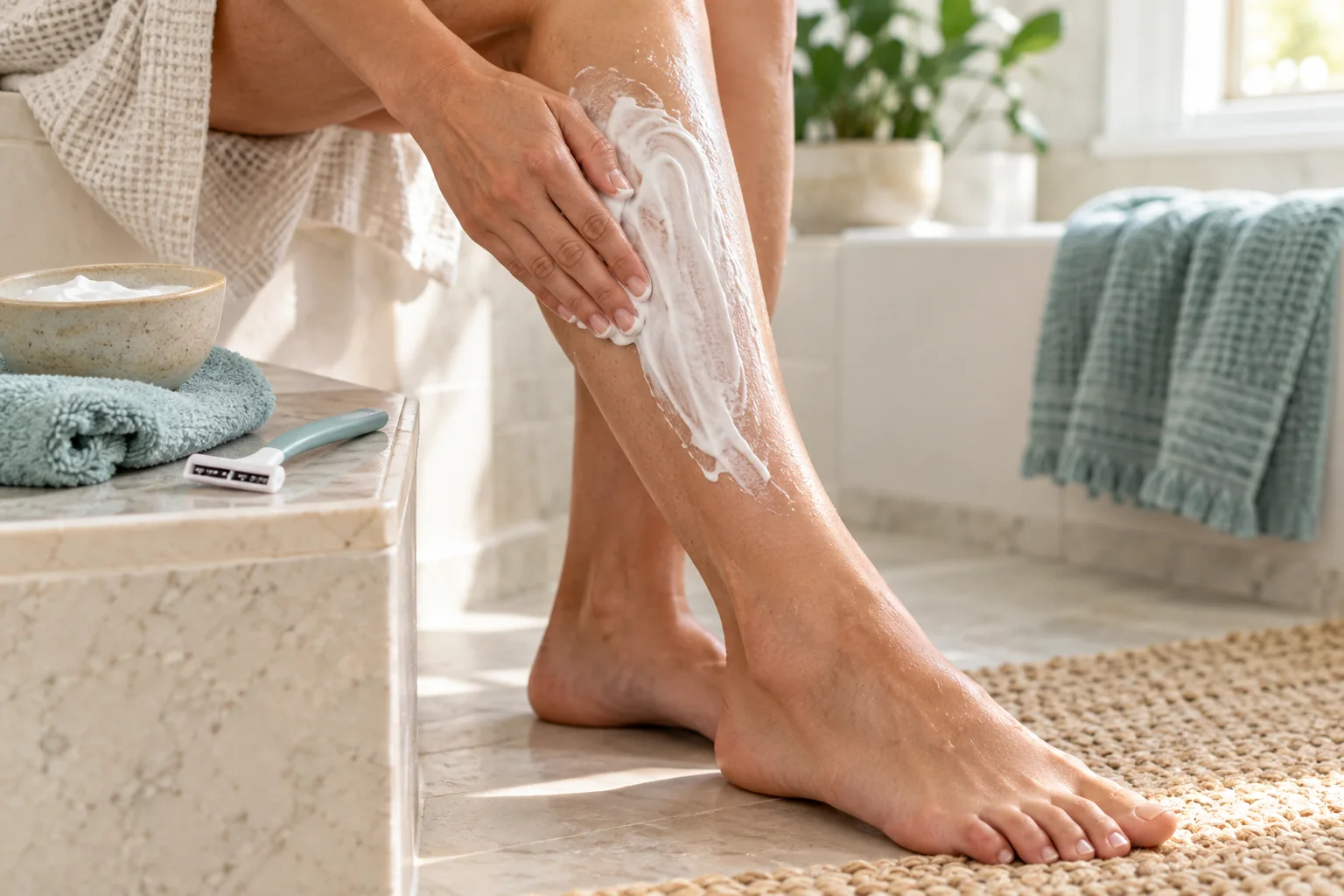
What About Ingrown Hairs on the Legs or Bikini Line?
The legs and bikini line are common places for ingrown hairs, along with the face, neck, and underarms. Any area where you remove hair can be affected. [5]
When a bump interrupts your usual routine, avoid shaving directly over it to make the area look smoother. That extra pass can keep irritating skin that needs time to settle.
Be careful with new products, too. An uncomfortable bump is not a good place to experiment with several acids, scrubs, and hair-removal creams at once. If you react, it becomes harder to tell what is causing the discomfort.
A deep lump that repeatedly returns in the same spot deserves an examination. Do not assume it is an ingrown hair simply because it sits in an area you shave.
What Can You Do for an Ingrown Hair You Already Have?
Leave the tweezers alone for now. If you cannot easily see the hair, trying to find it beneath the skin can turn a small bump into a wound.
For a mild bump, pause hair removal over the area and try a warm compress for comfort. Avoid squeezing, picking, or digging. Those actions can damage the skin and increase the chance of infection. [6]
You do not need to keep adding products until something works. Watch whether the tenderness and swelling are settling. If they are not, or the area is becoming more painful, get advice.
Treatment depends on the cause. A clinician may need to check for infection or another condition before recommending what to use. [3]
When Is It Time to Make an Appointment?
An occasional small bump may settle on its own. A cycle of bumps, healing, and new bumps is a reason to review your routine with a professional—especially if you are starting to notice lasting discoloration or scars. [4]
Seek prompt medical advice if the area becomes very painful, hot, or swollen. Fever, chills, or feeling unwell alongside the bump also need medical attention. [5]
At your appointment, explain how long the problem has been happening and what you have already tried. Mention your razor, waxing routine, and skincare products. That information helps make the visit more useful than simply asking which cream to buy next.
Could Laser Hair Removal Help?
If shaving repeatedly leaves you with ingrown hairs, it may be worth discussing a different approach to hair removal. Laser hair reduction can help some people by reducing the hair that regrows, although suitability and results vary. [6]
At Renewed, a consultation for laser hair removal gives you an opportunity to discuss your skin, hair, and the areas that bother you. For recurring problems around the bikini area, Brazilian laser hair removal may be one option to consider. Have a painful or potentially infected bump assessed before proceeding with a cosmetic treatment.
Frequently Asked Questions
Do ingrown hairs go away on their own?
Many do. Give the skin a chance to recover without picking or repeatedly removing hair over the bump. If it does not clear or keeps returning, arrange an evaluation. [1]
How long do ingrown hairs last?
There is no reliable deadline for every bump. What matters is whether it is improving. Increasing pain or swelling should prompt a call to a healthcare professional, rather than waiting for a certain number of days to pass. [3]
Will switching from shaving to waxing stop them?
Not necessarily. Waxing and tweezing can also cause ingrown hairs. If several methods leave you uncomfortable, discuss your options instead of continuing to switch between them. [5]
Get Help With Recurring Shaving Bumps in Tucson
You should not have to plan your grooming routine around the same painful spot every week. If bumps keep returning, finding out why is a useful next step.
Svetlana Burtman and the Renewed Medical Health and Beauty team guide personalized care planning around patients’ skin concerns and goals.
To discuss suitable hair-reduction options, schedule a consultation at a Renewed location in Tucson. Bring your questions—and the names of the products you currently use.
This article provides general educational information and does not replace an individual medical assessment. Images are AI-generated illustrations and do not depict actual patients or treatment results.
Medical References
- Mayo Clinic. Ingrown hair: Symptoms and causes.
- Mayo Clinic. Ingrown hair: Diagnosis and treatment.
- Cleveland Clinic. Ingrown Hair: Causes, Treatment & Prevention.
- American Academy of Dermatology. 6 razor bump prevention tips from dermatologists.
- NHS. Ingrown hairs.