
Dynamic vs. Static Wrinkles: Why Some Lines Stay When Your Face Is at Rest

You first notice a forehead line when you raise your eyebrows. For years, it disappears as soon as your face relaxes. Then, one morning, a faint crease is still there.
That change can be more puzzling than the line itself. Has your skin suddenly aged? Is your moisturizer no longer working? Would treating the muscle make the crease disappear?
The distinction between dynamic and static wrinkles helps explain what you are seeing. Dynamic wrinkles appear with facial movement. Static wrinkles remain visible when your face is relaxed. Many familiar facial lines have both components.
When considering treatment, a useful starting point is to understand how much of a line comes from movement and how much remains visible in the skin at rest.
What Are Dynamic Wrinkles?
Dynamic wrinkles appear as facial muscles contract and fold the skin. Think of the horizontal lines across your forehead when you lift your eyebrows, the creases between your brows when you concentrate, or the lines beside your eyes when you smile.
When the expression ends, these lines soften substantially or disappear.
They are often called expression lines. Their appearance reflects both muscle movement and the condition of the skin above it. Facial movement is one of several contributors to wrinkle formation, alongside aging, sun damage, and other influences.
A smiling photograph may show pronounced creases around your eyes even when that area looks relatively smooth at rest. Looking at both expressions gives a clearer picture of the concern.
What Are Static Wrinkles?
Static wrinkles remain visible without an active expression. A forehead crease may still be there after you lower your eyebrows. A line between the brows may be noticeable even when you feel completely relaxed.
“Static” describes that resting appearance. The line may be fine or deep, recent or longstanding.
It can also become more pronounced with movement. A faint resting crease between the eyebrows, for example, may deepen considerably when you frown. The same crease has a static component and a dynamic component.
Dynamic vs. Static Wrinkles: A Simple Comparison
| Feature | Dynamic wrinkles | Static wrinkles |
|---|---|---|
| When you see them | During facial expressions | When the face is relaxed |
| After the expression ends | They soften substantially or disappear | Some of the line remains visible |
| A familiar example | Forehead lines that appear when you raise your eyebrows | A forehead crease visible with your eyebrows relaxed |
| What matters during assessment | How facial movement folds the skin | The resting crease, skin quality, and surrounding support |
The distinction becomes useful when describing your goal. “I want this crease to look softer when my face is relaxed” gives a clinician more information than “I want fewer wrinkles.”
Why Do Some Expression Lines Begin to Stay?
Skin repeatedly folds in familiar places. As its elasticity and underlying support change, those folds may become more noticeable at rest.
Aging, ultraviolet exposure, smoking, and repeated expressions can contribute together. That combination helps explain why people of the same age develop different patterns of facial lines.
There is no universal age when a dynamic line becomes visible at rest. Some people notice a persistent crease between the brows first. Others become aware of forehead lines or changes around the eyes.
The transition can be gradual. A line may initially remain visible only under strong overhead lighting, then become easier to see in ordinary daylight.
You can continue smiling and expressing yourself. Facial movement is normal. Understanding how your skin responds to that movement is more useful than trying to keep your face still.
The Tucson Factor: Dry Air and Years of Sun Exposure
In Tucson, two influences can show up together: surface dryness and accumulated sun damage.
After a windy desert walk or time in air conditioning, your skin may feel tight and look more finely lined. A dry environment can contribute to roughness and dryness. Over the years, ultraviolet exposure can also change skin texture and accelerate visible aging. The National Institute on Aging describes both environmental dryness and cumulative UV damage as concerns for aging skin.
These influences affect appearance in different ways.
If fine lines soften after moisturizing, surface hydration is contributing to how noticeable they look. A crease that remains may also reflect longer-term skin changes and repeated folding. Both can be present in the same area.
The UV index varies with the season, time of day, and conditions. Cooler weather is still a good time to maintain sun protection.
For everyday care in Tucson, keep protection and skin comfort consistent. Broad-spectrum SPF 30 or higher and regular moisturizing are practical starting points. Sunscreen helps protect against further UV damage, while moisturizer can temporarily soften the appearance of some fine lines.
That might mean keeping sunscreen convenient for morning errands, wearing a hat on walks, and choosing a moisturizer your skin tolerates comfortably. These habits support skin health whether or not you choose a cosmetic procedure.
What the Difference Means When Considering Botox
Botulinum toxin temporarily reduces activity in selected facial muscles, helping soften lines associated with their contraction.
When a crease is also visible at rest, the consultation should address how much of that resting line is likely to remain.
This is an expectations question worth discussing before treatment. A line may soften while a faint crease remains. The amount of change depends on its characteristics and the condition of the surrounding skin.
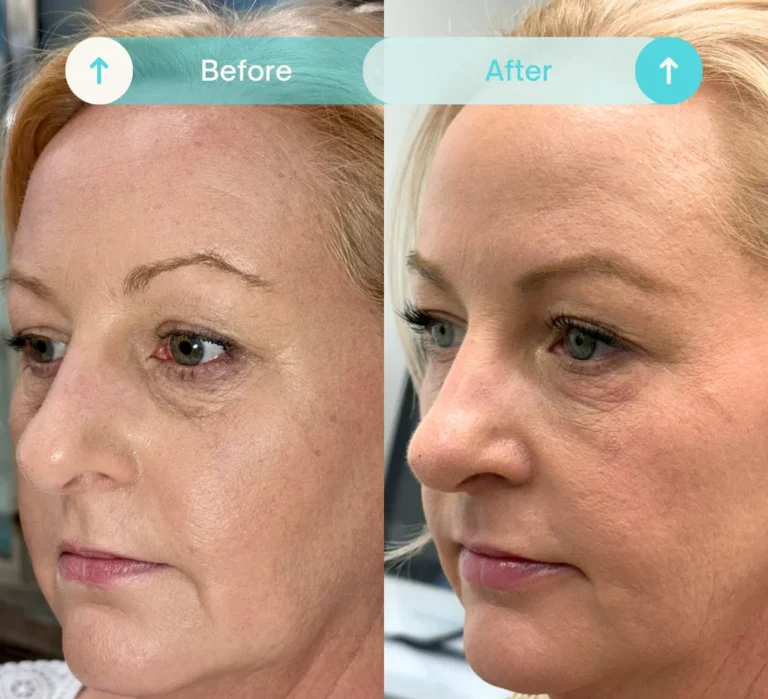
The familiar shortcut “dynamic wrinkles need Botox, static wrinkles need filler” leaves out too much. Movement, resting appearance, skin quality, and facial support all contribute to the assessment.
For many people, the goal is a softer expression with familiar movement still present. Others care most about one crease they see even when relaxed. Being clear about that priority helps guide the conversation.
A useful treatment discussion should connect the proposed approach to the specific change you want to see.
A Better Way to Prepare for Your Consultation
Start with the moment when the line bothers you most.
Is it visible mainly in smiling photographs? Does it remain between your eyebrows throughout the day? Does makeup collect in the same forehead crease?
Those observations are useful. Repeatedly checking in a magnifying mirror often makes it harder to judge what you see from a normal distance.
If you bring photographs, choose a few taken in similar lighting. Include a relaxed expression and a normal smile or brow movement. Avoid filters that smooth the skin.
During the appointment, ask:
- How much of this line is related to movement?
- What contributes to the crease that remains at rest?
- What improvement is realistic for my skin?
- How would the proposed approach affect my usual expressions?
- What are the risks and alternatives?
If several expression-related areas concern you, a full-face Botox consultation offers an opportunity to discuss them together, consider how your face moves, and set realistic expectations for the changes you would like to see.
You can arrive with a clear concern without already knowing which procedure you want.
Frequently Asked Questions
What is the difference between dynamic and static wrinkles?
Dynamic wrinkles appear with facial expressions and soften when the movement stops. Static wrinkles remain visible at rest. A single line can have both characteristics.
Can dynamic wrinkles become static?
Yes. A line that once disappeared after an expression may gradually remain visible. Changes in skin elasticity, accumulated sun exposure, and repeated folding can all contribute. The timing varies from person to person.
Does “static” mean a wrinkle is permanent?
It means the line is visible at rest. How much its appearance can improve depends on its characteristics, the condition of the skin, and the approach being considered.
Why do my wrinkles look more noticeable on some days?
Lighting, facial expression, and surface dryness can change how prominent lines appear. Comparing your skin under similar conditions gives you a more useful reference than switching between a bright bathroom mirror and a filtered photograph.
Can moisturizer help static wrinkles?
Moisturizer can temporarily soften the appearance of some fine lines. A deeper resting crease may involve changes beyond surface hydration, so improvement from moisturizing can be partial.
Why might a crease remain after Botox?
Reducing muscle activity can soften the movement-related part of a line while an existing resting crease remains visible. Discussing this possibility beforehand helps you judge the result against realistic goals. Your treating clinician can assess any concerns about the outcome.
This article provides general education. Individual recommendations depend on an assessment of your skin, facial movement, medical history, and goals. The cover is an editorial illustration. The before and after photographs are a separate image provided by the clinic.